Start here
How to choose the best braces colors for you
The best braces color is one you enjoy wearing and your orthodontist can provide. Start by comparing navy for a darker look, silver for a quieter one, and a favorite bright or pastel shade. Keep two finalists to compare with the real elastic samples at your appointment.
By the bracescolors teamUpdated Color inspiration & product guidance
What do you want your colors to do?
A shortlist is easier to judge than a tray of every possible color. Choose a goal first: blend with the hardware, make a bold statement, or coordinate with something you wear often. Then compare only two or three options on the same smile.
For a quiet starting point, try silver. For a darker outline, try navy. If you want the color to be the main feature, compare pink or teal. These are styling suggestions from bracescolors, not a ranking of which shade is objectively best.
- Pick one neutral or dark reference color.
- Compare it with a color you already like wearing.
- Look at both at normal viewing size, not only zoomed in.
- Save a first choice and a backup that your orthodontist may stock.
Braces colors and skin tone: compare, rather than follow a rule
Skin tone, lips, clothing and lighting all change the overall impression of a smile. Color guides often give different recommendations for the same complexion. Treat those suggestions as ideas to test, rather than a rule about which colors you can wear.
On a deeper complexion, you might compare a light lilac with a saturated blue to see which contrast you prefer. On a lighter complexion, compare teal with pink. For any skin tone, keep the photo and lighting the same while changing the color. You do not need a skin-tone quiz to choose a shade you like.
Colors are not divided into choices for boys, girls or adults. If you want a discreet work look, compare silver and navy; if you prefer something expressive, try a bright pair. The decision is about the look you want, not your age or gender.
Should your first choice be one color or two?
One color gives you a clear reference. If you like it, add a second shade and compare again. A close pair such as blue and teal feels different from a light-dark pair such as pink and navy. Change one variable at a time so you can tell what you actually prefer.
Our two-color preview alternates the colors between brackets. It does not model every pattern an orthodontist can create. If you want upper and lower teeth in different colors, bring the idea to your appointment and ask whether it is available.
Turn the preview into an appointment shortlist
Write down the color names as well as saving a preview. The AAO explains that colored o-rings are generally replaced during adjustment appointments; your own appointment schedule and available shades come from your orthodontist. A digital HEX code is useful for reproducing a screen color, but it is not an order code for elastic bands.
Sources: American Association of Orthodontists: Glossary of orthodontic terms
See the color ideas on a smile
Illustrative previews. Open a recipe, then sign in to adjust it or save your favorite. Real shades vary by supplier and lighting.
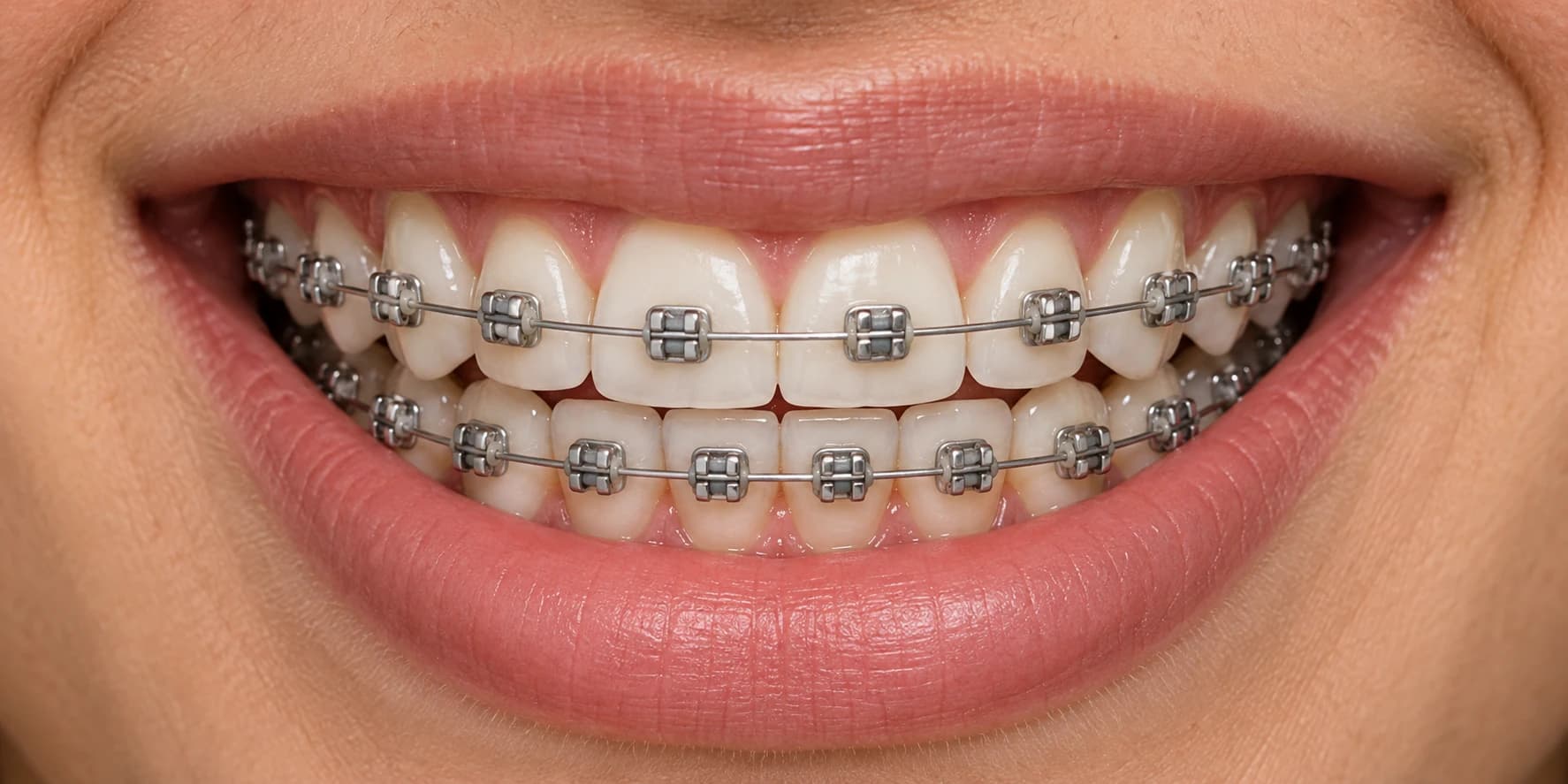
Quiet silver
A neutral starting point to compare with brighter choices.
Preview quiet silverClassic navy
Compare the darker outline with silver on the same smile.
Preview classic navyLilac + pink
Try two softer colors together before choosing just one.
Preview lilac + pinkCommon questions
What braces color should I get for the first time?
Start with one favorite and one contrasting option. Comparing navy, silver and a bright or pastel shade can help you decide whether you prefer dark, subtle or colorful ties. Ask to see the actual samples before choosing.
Is there one best braces color for everyone?
No. Personal preference, your natural tooth shade, the available elastic range and lighting all matter. A preview helps narrow the choices; it cannot choose a universally best color.