Practical questions
Braces colors to avoid? Think about contrast and staining
There is no universal list of bad braces colors. White or clear elastic ties may show discoloration, and very light or yellow shades may create a contrast you do not like. Compare them with a darker shade and ask your orthodontist about the materials they use.
By the bracescolors teamUpdated Color inspiration & product guidance
White and clear ties: a fresh look can change
Central Oregon Orthodontics notes that white and clear elastic ties can pick up pigments from food and drink. A digital preview shows your chosen color at one moment; it cannot simulate how a particular elastic brand will look after weeks of wear.
Sources: Central Oregon Orthodontics: How to pick the best rubber band colors for braces
Yellow, orange, green and black are style tradeoffs
A shade that looks good on a color card can look different next to teeth and gums. If you are unsure about a warm color, compare yellow or orange with navy using the same preview. If a very dark outline feels too strong, compare black with silver.
Some online lists label green, brown or black as colors to avoid. There is no reason to turn that into a rule for everyone. You might enjoy a bold green or a seasonal black-and-orange pair. Use your own comparison and the real band samples to decide.
A color name does not predict a band's performance
Different suppliers can use different materials and shades under similar names. A photo taken just after fitting is also not evidence of how the ties will look later. We do not give stain-resistance scores because we have not tested specific products.
If one set of bands changed color in a way you disliked, tell your clinic which shade it was and what happened. That is more useful than assuming every pink, blue or clear tie behaves the same way. Ask whether a different available material or shade would suit your preference.
What to do if the ties are already discolored
Contact your orthodontist about discolored or damaged ties and follow their care instructions. Do not remove, recolor or replace fitted ligatures yourself. The AAO distinguishes these ligatures from removable treatment elastics, which have their own prescribed wear instructions.
Sources: American Association of Orthodontists: Orthodontic elastics
Make the next choice easier
Keep a short note of the shade you wore, what you liked when it was new and whether its appearance changed. Before the next visit, save a dark option, a neutral option and a favorite bright color. The goal is a useful conversation about the bands your clinic actually stocks.
Our preview can help with the initial style decision. It cannot assess oral health, predict staining, or show the exact transparency and texture of a real elastic tie.
See the color ideas on a smile
Illustrative previews. Open a recipe, then sign in to adjust it or save your favorite. Real shades vary by supplier and lighting.
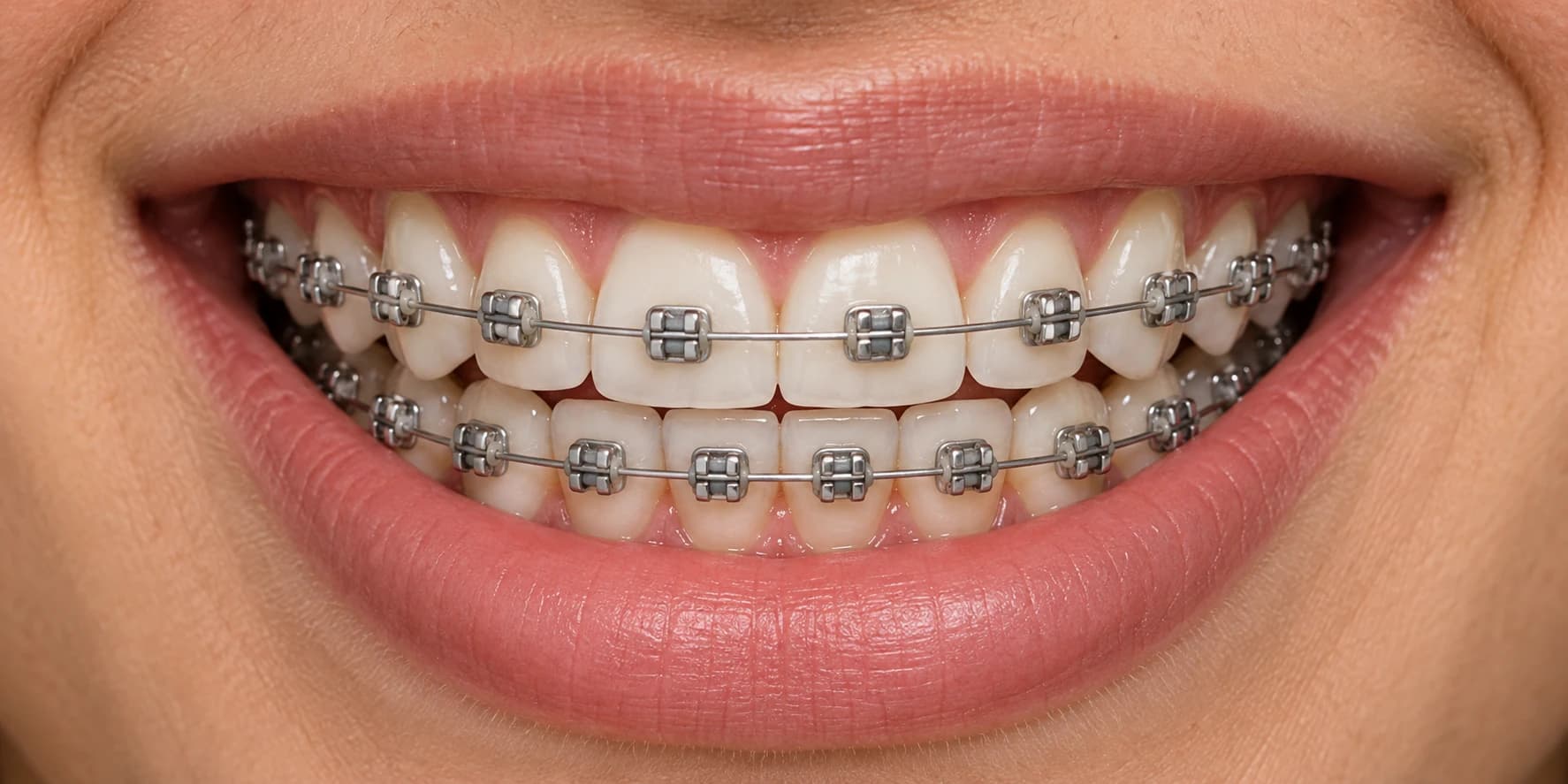
Silver reference
Compare the neutral appearance with a very light shade.
Preview silver referenceNavy reference
A darker comparison, without a promise about stain resistance.
Preview navy referenceCommon questions
Are any braces colors guaranteed not to stain?
We cannot promise that a color will stay unchanged. The elastic material, supplier and wear conditions matter. Ask your orthodontist about the options they use; this site does not test band stain resistance.
Can I change the colored ties at home?
Leave fitted ligature changes to your orthodontic team. Removable elastics prescribed for your bite are a different part; wear and replace those only as your orthodontist directs.